
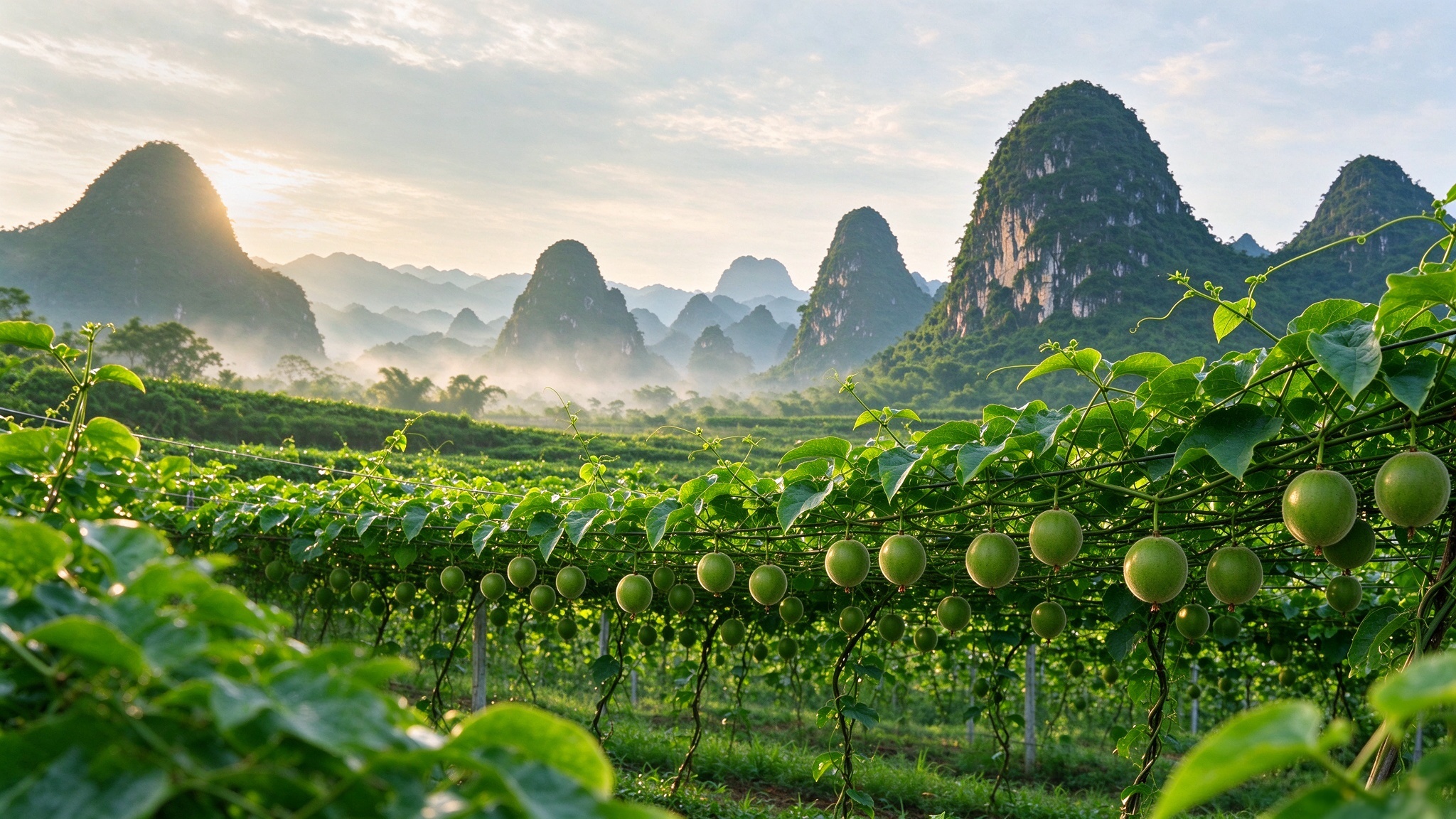
Why Guilin Karst Mountains Are Ideal for Growing Premium Monk Fruit
The global demand for natural zero‑calorie sweeteners keeps rising as more consumers move away from high‑sugar food and artificial sweeteners. Among all plant‑based sweetening solutions, monk fruit (Siraitia grosvenorii) stands out for its excellent taste profile and zero‑calorie property. However, not every region can produce high‑quality monk fruit with high mogroside content. Guilin, especially Yongfu County, is globally recognized as the genuine origin of premium monk fruit, thanks to its one‑of‑a‑kind karst mountain ecological environment.
Guilin’s famous karst landforms feature limestone peaks, well‑drained mountain soil, clean spring water, mild temperature and proper humidity all year round. Monk fruit vines hate water‑logged soil. The porous karst soil prevents root rotting, while mountain spring water delivers rich natural minerals to the plant. Cool mountain breeze and scattered sunlight avoid excessive sunburn for the fruit skins. These combined natural conditions directly improve mogroside accumulation inside monk fruit. That is why monk fruit planted elsewhere often shows lower sweetness and weaker active‑ingredient performance compared with Guilin‑sourced batches.
At Guilin Mingcheng Bencao International Trade Co., Ltd, we maintain long‑term cooperation with local farming families in Yongfu — China’s official “Hometown of Monk Fruit”. We guide farmers to practice eco‑friendly cultivation, reducing unnecessary chemical inputs to protect soil quality. We arrange on‑site field inspections before every harvest season to monitor fruit maturity. Only fully‑ripened monk fruits are picked manually. Unripe or damaged fruits will be screened out at the very first stage.
After harvest, fresh monk fruits are transported to our 4,600‑square‑meter factory located in Guilin High‑Tech Industrial Park. Unlike traditional high‑temperature baking which creates heavy bitter burnt flavor, we adopt industry‑leading microwave low‑temperature vacuum dryers. This gentle processing technology locks natural sweetness and mogroside without introducing burnt tastes. Our production line is equipped with multi‑layer high‑precision color sorters and blending machines. We also run a professional in‑house testing laboratory for regular quality checks. Our company holds Food Production License, Export Food Filing Certificate and ISO9001 certification. Every production batch can provide complete raw‑material test reports for overseas customs clearance.
Our full‑range monk‑fruit product portfolio covers whole dehydrated monk fruit, peeled monk‑fruit core, monk‑fruit powder, zero‑calorie monk‑fruit sugar, monk‑fruit concentrated juice, pyramid‑bag monk‑fruit tea and custom gift boxes. Our annual processing capacity reaches 9 million whole monk fruits and 200 tons of monk‑fruit core. We support bulk wholesale orders as well as OEM & ODM customisation: clients can adjust specifications, design private‑label packaging and customize tea‑blend formulas according to market positioning.
For food, beverage and dietary‑supplement manufacturers worldwide, stable origin supply and consistent quality are critical. Many international buyers once faced troubles such as unstable sweetness, bitter batches and incomplete export documents when importing monk fruit. By sourcing directly from Guilin origin with Mingcheng Bencao, you skip intermediate traders and gain traceable, certified monk‑fruit raw materials.
If you are searching for reliable natural sweetener suppliers, feel free to reach out to our sales team. We can offer product samples, full COA test reports and detailed quotation for your project.